

Tabla de contenido
How to Talk to Your Pediatrician About Autism Concerns?
For many parents, autism concerns do not appear all at once. They usually begin with small moments that feel difficult to explain, and the necessity to have an autism discussion with a pediatrician emerges.
Maybe your toddler stopped using words they once said regularly. Maybe they avoid eye contact, become overwhelmed during transitions, or seem less interested in interacting with others. Sometimes, it is simply a feeling that something about your child’s development looks different from what you expected.
If you are preparing for an autism discussion with a pediatrician, you are not alone. Many families hesitate to bring up concerns because they fear overreacting or hearing an answer they are not ready for.
But asking questions early really matters.
Parents are often the first to recognize developmental differences. Early conversations can lead to earlier evaluations, earlier support, and stronger developmental outcomes for children.
In this guide from ABA Centers of New Jersey, we will explain how to discuss concerns confidently, what signs to mention, how autism screening works, and where families can find support and autism diagnosis for children in New Jersey. Let’s dive in!
What Signs Should I Bring Up to the Doctor?
When starting an autism discussion with a pediatrician, specific examples are more helpful than general worries.
Instead of saying: “Something feels off.”
Try describing behaviors you consistently observe, such as:
- Limited response to name
- Delayed speech or language regression
- Reduced eye contact
- Little pointing or gesturing
- Repetitive movements
- Strong distress during routine changes
- Limited interest in social interaction
Según los CDC signs and symptoms resource, autism may involve differences in social communication, behavior, sensory processing, and developmental milestones.
El Autism Speaks guide to early signs also notes that autism concerns in toddlers may include repetitive behaviors, delayed communication, and challenges with shared attention or play.
It’s important to keep in mind that not every developmental delay means autism. However, consistent patterns across communication and behavior deserve professional attention.
Parents discussing autism concerns in toddlers should never feel embarrassed for asking questions early.
What Should I Track Before the Appointment?
Preparing notes beforehand can make an autism discussion with a pediatrician more productive and less stressful.
Pediatricians often rely heavily on parent observations, especially when evaluating autism concerns in toddlers.
Before the appointment, consider tracking:
- Communication milestones
- Response to name
- Eye contact and social interaction
- Play behaviors
- Sensibilidades sensoriales
- Emotional regulation challenges
- Repetitive movements or routines
The CDC recommends monitoring objetivos del desarrollo because they provide important context during evaluations.

For example:
- By 12 months, many children use gestures and respond to their name.
- By 18 months, toddlers often use meaningful words.
- By 24 months, two-word phrases and pretend play commonly emerge.
If several milestones are delayed or inconsistent, pediatricians may recommend additional screening or referral for an autism diagnosis for children.
Videos, written observations, or milestone checklists can also help families communicate concerns more clearly.
How Do Pediatricians Screen for Autism?
During an autism discussion with a pediatrician, doctors typically begin with developmental screening rather than diagnosis.
Screening may include:
- Parent questionnaires
- Developmental milestone reviews
- Observation of communication and behavior
- Autism-specific screening tools
One common tool is the M-CHAT, designed to identify autism concerns in toddlers who may benefit from further evaluation.
Screening does not confirm autism. Instead, it helps determine whether a child should receive a comprehensive autism diagnosis for children through developmental specialists.
Depending on the results, pediatricians may:
- Recommend follow-up monitoring
- Refer to developmental pediatricians
- Suggest speech or occupational therapy evaluations
- Connect families with early intervention services
Research published through the National Institutes of Health shows that earlier identification and intervention can improve communication, adaptive skills, and independence over time.
That is why starting an autism discussion with a pediatrician early can make a meaningful difference.
What Happens During an Autism Diagnosis for Children?
An autism diagnosis for children usually involves several steps rather than one single appointment.
Comprehensive evaluations may include:
- Developmental history reviews
- Parent interviews
- Behavioral observation
- Communication assessments
- Standardized diagnostic tools
Clinicians evaluate areas such as:
- Social communication
- Comportamientos repetitivos
- Sensory processing
- Adaptive functioning
For many families, the process brings both relief and uncertainty. However, a diagnosis often provides the clarity needed to access meaningful support.
Families experiencing autism concerns in toddlers frequently describe diagnosis as the moment they finally understood how to move forward.
Why Early Intervention and ABA Therapy Matter
Early intervention can help children with autism strengthen communication, emotional regulation, social interaction, and daily living skills from a young age.
One evidence-based approach commonly recommended after an autism diagnosis for children is Applied Behavior Analysis (ABA) therapy.
ABA therapy uses individualized strategies to help children:
- Build communication skills
- Increase independence
- Improve behavioral flexibility
- Strengthen social interaction
- Develop confidence in everyday environments
Early support does not aim to change who a child is. The goal is to help children with autism develop skills that allow them to thrive at home, school, and in the community.
For families navigating autism concerns in toddlers, structured support can provide reassurance during an overwhelming time.
Where Can I Get an Autism Diagnosis for My Child in New Jersey?
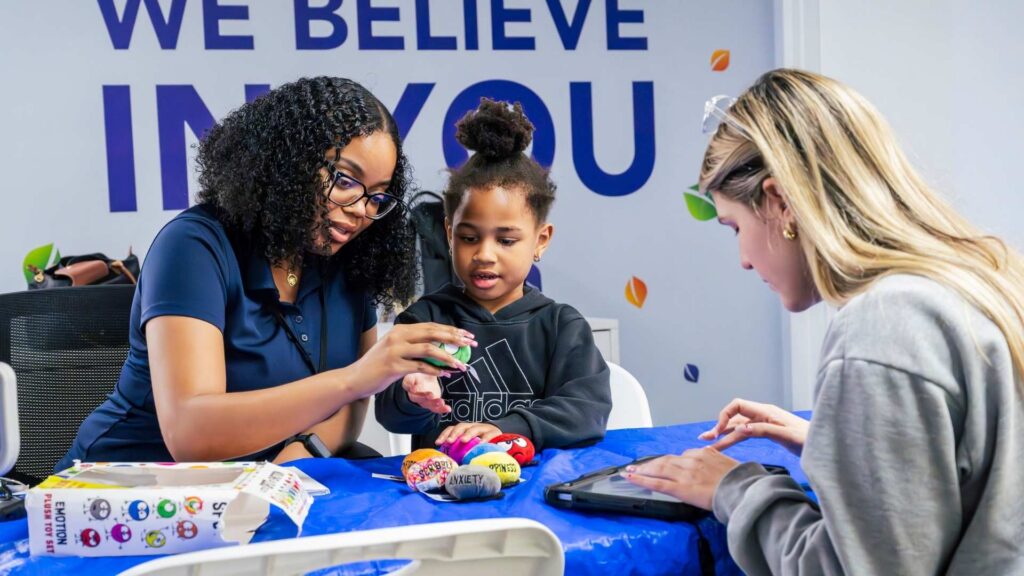
ABA Centers of New Jersey provides autism evaluations and ABA therapy services for families seeking answers and support.
Our team works closely with families throughout the autism discussion with a pediatrician process and beyond, helping parents understand evaluations, treatment recommendations, and early intervention options.
We provide individualized care focused on communication, independence, emotional regulation, and long-term developmental growth.
If your family is exploring autism diagnosis for children or learning more about treatment options, ABA Centers of New Jersey is here to help. Schedule a fee consultation today by calling us at (855) 640-7888 or by clicking here.
And Remember…
Having developmental concerns about your child can feel emotional and confusing, especially during the early stages. But beginning an autism discussion with a pediatrician is about seeking clarity, understanding your child’s needs, and accessing support as early as possible.
For many families, those first conversations become the starting point for meaningful progress, confidence, and long-term growth.






 Español
  English