


How Speech Delay and Autism Show Up in Early Communication
The key to start noticing the differences between the two concepts is not just what your child is doing, but how they are trying to connect and communicate. According to the American Speech-Language-Hearing Association, some children may take longer to develop spoken language while still actively trying to communicate.
What Is a Speech Delay in Toddlers?
A speech delay means a child is not using words as expected for their age, but communication is still present in other ways:
- Using gestures like pointing or reaching
- Making contacto visual to get your attention
- Trying to communicate through sounds or expressions
- Showing interest in interacting, even without words
The desire to connect is there; words are just taking a little longer to develop.
What Does Autism Look Like in Early Communication?
When looking at señales tempranas de autismo, communication differences go beyond speech alone.
Some toddlers may show:
- Differences in back-and-forth interaction
- Less use of gestures to share interest
- Reduced attempts to engage socially
- Different responses to communication cues
Autism is not defined only by delayed speech. It typically involves differences in how a child connects, interacts, and communicates across multiple areas of development, not only speech.
Speech Delay vs Autism: How Patterns Can Look in Daily Life
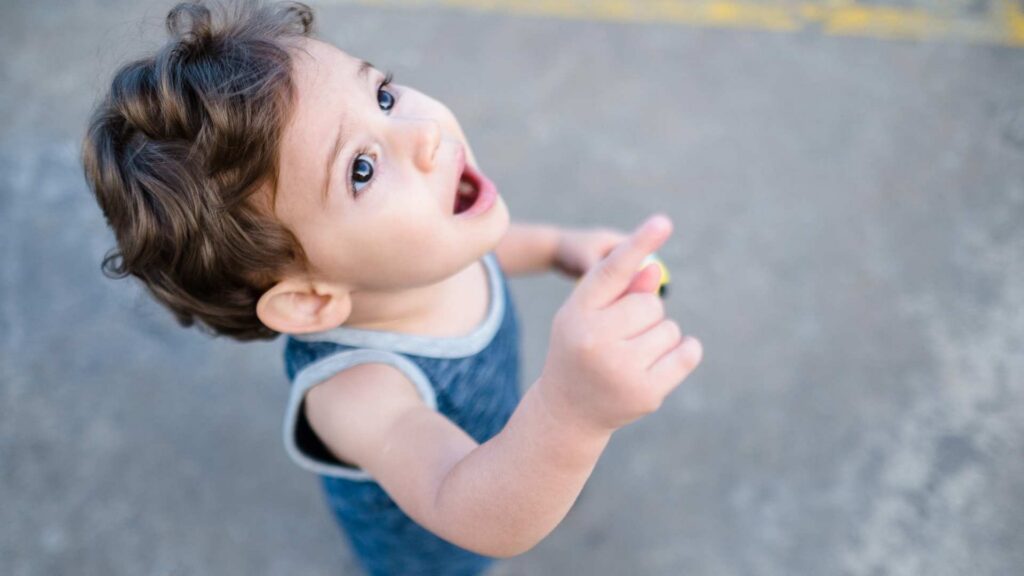
When comparing speech delay vs autism, the differences often become clearer in everyday interactions. Here are some of the differences parents may notice in daily life:
A Quick Comparison at a Glance
Sometimes it helps to see these patterns side by side:
What You Might Notice | Speech Delay | Autism (Possible Patterns) |
Communication attempts | Uses gestures, sounds, or eye contact to communicate | May show fewer attempts or communicate differently |
Eye contact and connection | Seeks connection and interaction | May show differences in social engagement |
Response to others | Usually responds to name or interaction | May respond inconsistently to social cues |
Use of gestures | Points, shows, or brings things to share interest | May use fewer gestures or use them less consistently |
Play style | Explores toys in different ways | May prefer repetitive patterns in play |
Overall development | Primarily affects speech and language | Often involves multiple areas of development |

It can affect:
- Social connection
- Communication style
- Play and behavior
This is why professionals don’t focus on a single skill, such as speech. They look at how different areas of development come together.
When Speech Delays and Autism Occur Together
It’s natural to think in terms of either/or when comparing speech delay vs autism. But in reality, development doesn’t always fit into clear categories.
A child can have both a speech delay and autism. In fact, many children on the autism spectrum also experience delays in speech and language development. The difference is that autism affects more than just language.
This is why the question isn’t always speech delay or autism, but rather how different areas of development come together.
For example, a child may have delayed speech, show differences in social interaction, use fewer gestures, and have limited back-and-forth communication. Many or all at once. In these cases, speech delay is one part of a broader developmental pattern.
Whether a child has a speech delay, autism, or both, early guidance can make a meaningful difference in how they develop communication and social skills.
What to Do If You Have Questions About Your Child’s Development

If you’re comparing speech delay vs autism and still feel uncertain about what may be going on with your child’s development, you don’t have to figure it out on your own. Start by:
- Talking with your child’s pediatrician
- Sharing specific observations about communication and behavior
- Asking about developmental screening or evaluation
Early evaluation doesn’t mean labeling; it means clarity for your family and your child’s support.


 Español
  English