

Table of Contents
My Child Was Just Diagnosed with Autism
The most important thing to keep in mind when a child is diagnosed with autism is that you are not alone, and it is not your fault. According to statistics on autism by the Centers for Disease Control and Prevention, 1 in 31 kids has been diagnosed with Autism Spectrum Disorder (ASD).
Although the root of autism is still unknown, genetics and environment are thought to play a part, and a parent is in no way responsible for their child’s autism diagnosis.
There are many emotions a parent can feel when a child is diagnosed with autism, and no emotional response should be considered inappropriate or wrong in any way. Regardless of the initial impact, the challenge arises in understanding the inner world of a child diagnosed with autism and what to do next.
What Does Spectrum Mean?
Autism spectrum disorder (ASD) frequently causes behavior, communication, and social relationship issues. Additionally, repetitive and constrained hobbies or activities might appear. In 2013, modifications to the diagnostic criteria recognized PDD-NOS and Asperger’s under the umbrella of autism. Whatever modifications are made, families should continue to feel at ease using the phrases that work for them.
As the name implies, ASD has a spectrum of severity. When a child is diagnosed with autism, some will speak, while others won’t. People who are “high functioning” may be able to communicate successfully and advocate for their needs. Conversely, a child considered “lower functioning” may not speak at all. Your child’s symptoms and abilities will fall into one of three levels, each denoting severity.
Level 1: The least socially apparent level, children in this category require less intensive assistance. Language and cognitive abilities in this category may not be severely impacted.
Level 2: Here, we see some cognitive and language deficiencies that require “substantial” assistance. These difficulties lead to social impairment and more severe communication challenges.
Level 3: The most acute category, children at this level are considered “lower functioning” and require “quite substantial support.” Their language and cognitive abilities are compromised, often rendering them unable to live independently.
Some of the symptoms exhibited by a child diagnosed with ASD include:
- Having trouble in social situations, such as not being able to read nonverbal clues or make eye contact
- Being inflexible and incapable of adjusting to routine changes
- Displaying repetitive actions, such as spinning, tumbling to the ground, or excessive hand movements
- Focusing on favorite interests to the exclusion of external stimuli, such as particular media characters or TV shows
- Echolalia: the repetition of words and phrases
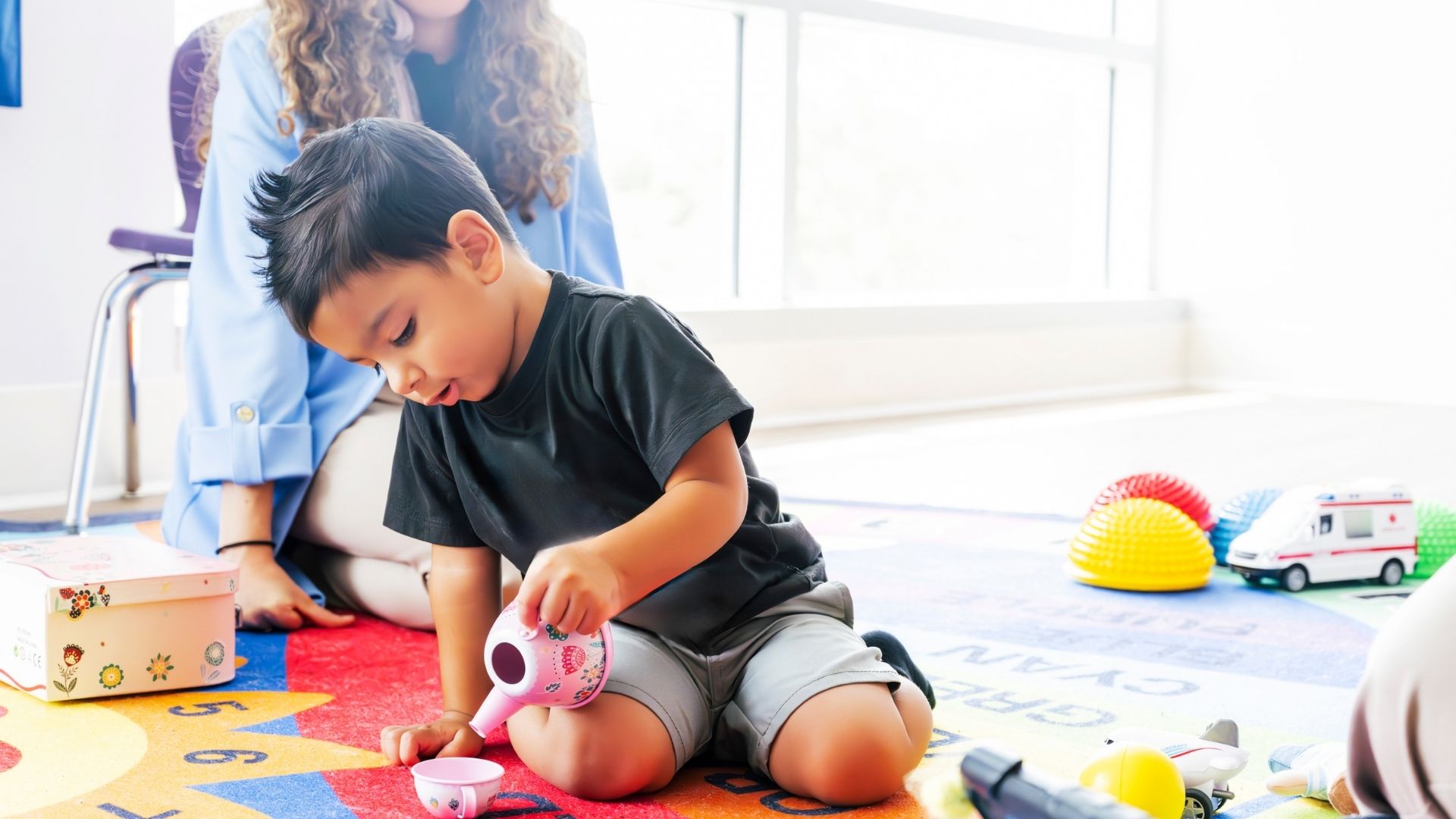
- Difficulty pretending or playing imaginatively. For instance, children with autism can become fixated on spinning a toy car’s wheels instead of pushing it
My Child Was Just Diagnosed with Autism: What Steps Can I Take?
If you’re wondering, “My child was just diagnosed with autism, and I don’t know what to do,” you’re not alone. This can be an overwhelming time for both you and your child.
Navigating the world of autism can feel daunting, but taking it step by step can help you and your family find the support and resources you need. In this guide, we’ll provide practical steps to get you started on this journey, ensuring you feel informed and empowered as you support your child.

-
Use Visual Aids
Children with an autism diagnosis are better visual than auditory learners. When communicating with your child, using visual language has many advantages. The Picture Exchange Communication System (PECS), which uses symbols and images to help individuals diagnosed with autism communicate, can be a helpful tool. Consult a specialist, such as a physician or behavioral therapist, if you think your child would benefit from a system like PECS.
-
Become Knowledgeable About Positive and Negative Reinforcement
Changing your response to a child’s conduct is the most efficient way to change the child’s behavior.
If your child misbehaves, such as having a crying fit over a toy they want to buy, consider how caving in might influence their future behavior. This is known as positive reinforcement: rewarding behavior by giving the child what they want. It can create a robust association between an effort and its reward.
The opposite of this is negative reinforcement, in which you respond by withholding the desired outcome or removing something else. When you respond to conduct with a negative consequence, such as withholding attention or restricting access to a toy, you will notice less of it in the future.
When children are driven and encouraged, all children—including neurodivergent ones—are more likely to develop and learn. Here are a few instances:
- Create a chart-style incentive system for your child, similar to the reward systems teachers often use. Your child can earn points for behaving well, and after a set amount of time, they can exchange them for an object or activity they love.
- Give your child options throughout the day to help them feel independent and in charge.
- When your child does something you want to see more of, praise them verbally right away. Actions that merit rewards include speaking, following instructions, and complying when it’s time to move on to a new activity.
- Screaming or other disruptive actions are frequently attempts to communicate. If the child is not in danger, it is preferable to disregard these behaviors. Your child will eventually start acting in a reasonable way to seek your attention. Remember, positive reinforcement; you must demonstrate that disruptive actions won’t achieve their desired results.
-
Strengthen and Expand the Support Structure
When a child is diagnosed with autism, they frequently perform better in an ordered environment. They thrive in structure when the day is as predictable as possible. As previously mentioned, engaging the child visually and incorporating that into their daily routine is ideal. Here are some tips on how to do it:
- Provide your child with a daily itinerary that details events with graphics and text.
- Keep a colorful rule list with image aids to help them internalize expectations.
- Give your child a visual cue before an activity ends. An example would be a come-here hand motion when it’s time to leave a place.
-
Pay Attention to Sensory Issues
The senses of a child diagnosed with autism may be different from yours. Individuals with autism may not process external stimuli as a neurotypical person would. Loud music or bright lights are the most common examples of this, with autistic children feeling overwhelmed and hypersensitive.
Alternatively, they may crave intense stimuli, such as a deep, lasting hug. You can make your child’s environment more comfortable by being mindful of their preferences.
-
Take Effective Steps to Get Your Child the Service They Require
You will frequently hear how crucial early intervention is. Children’s brains are still developing, so they are more likely to adapt and learn new skills when they begin therapy early, such as ABA therapy. If your child has previously undergone evaluation, take into account the aftercare recommendations made by their provider and decide whether they work for your family.
In addition, inform your child’s school about their autism diagnosis so they can begin developing an individualized education plan (IEP). The IEP will guarantee that your child’s needs are met and that the school makes accommodations.
When a child is diagnosed with autism, it’s recommended to consult your child’s developmental pediatrician to discuss your options while seeking supportive services, such as Applied Behavior Analysis (ABA) therapy. Other services to consider are:
- Workplace therapy
- Physical exercise
- Support groups for social skills
- Psychiatric assistance
- Medication
How Can ABA Help After Your Child Is Diagnosed with Autism?
Autism traits can benefit from ABA therapy, as it encourages helpful behavior and reinforces desired behavior. Board Certified Behavior Analysts (BCBAs) and Registered Behavior Technicians (RBTs) employ various strategies to promote the development of language, communication, and other skills necessary for independence.
ABA’s effectiveness has been investigated and confirmed in several studies. Many facets of ABA help your child achieve their objectives by providing the necessary support. Plans of care will be personalized based on the patient’s age, specific needs, and the family’s desired outcomes for family therapy.
Let ABA Centers of New Jersey Support your Child’s Journey
If you keep wondering, “My child was just diagnosed with autism, and I don’t know where to start”, at ABA Centers of New Jersey, everyone understands that your child means the world to you and that you would do anything to help them. After an autism diagnosis, choosing ABA therapy means putting your trust in a science-backed approach grounded in evidence, experience, and research.
You can expect advancements in your child’s communication, growth, and advocacy by including ABA therapy in their life.
Call us at (855) 640-7888 or schedule a free consultation if you’re interested in learning more about ABA therapy and how it can benefit your family and your child’s independence.



 English
  Español