
Table of Contents
How Does Progress Look in ABA Therapy?
Beginning Applied Behavior Analysis (ABA) therapy often brings hope, questions, and a desire to see positive changes as quickly as possible. While many parents look for major milestones, meaningful ABA therapy progress is usually built through consistent improvements that strengthen communication, independence, social participation, and everyday living skills over time.
For families across New Jersey, understanding what to expect in ABA therapy can make the process feel less overwhelming. Every child learns differently, so success isn’t measured by comparing children to one another. Instead, ABA focuses on individualized growth, helping each child build skills that improve daily life at home, school, and in the community.
Research supports this personalized approach. A recent review published by the National Center for Biotechnology Information (NCBI) found that individualized behavioral interventions combined with ongoing assessment can improve communication, adaptive behavior, and participation in everyday activities for many children with autism.
If you’re wondering whether your child is making meaningful progress, you’re not alone. Keep reading this guide by ABA Centers of New Jersey to learn what to expect in ABA therapy, how growth is measured, and why every small milestone is worth celebrating.
Why Do Small Wins Matter in ABA Therapy Progress?
The most meaningful changes often begin with achievements that may seem small at first. Before a child independently asks for a favorite toy, they may first learn to point toward it, make eye contact, use a gesture, or tolerate waiting for a response.
Each of these accomplishments represents valuable ABA therapy progress because it creates the foundation for more advanced skills later. Rather than expecting overnight transformations, ABA builds learning step by step, allowing children to develop abilities that become more natural and functional over time.
Examples of meaningful progress may include:
- Communicating wants and needs more effectively
- Participating in daily routines with less frustration
- Playing alongside siblings or peers
- Becoming more flexible during transitions
- Showing greater independence during everyday activities
Recognizing these everyday successes helps families appreciate that progress is happening, even when larger milestones are still ahead.
How Do ABA Therapy Goals Support Long-Term Development?
One of the greatest strengths of ABA is that treatment is individualized. Instead of following the same plan for every child, clinicians develop ABA therapy goals based on each child’s strengths, developmental needs, and family priorities.
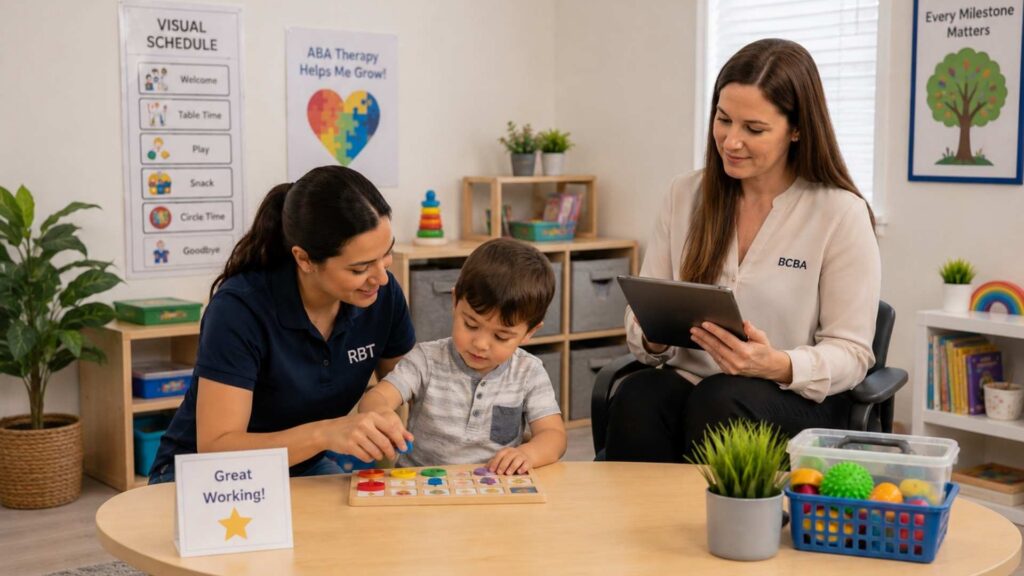
Before therapy begins, a Board Certified Behavior Analyst (BCBA) completes a comprehensive assessment that may include observations, caregiver interviews, developmental information, and evaluations of communication, adaptive skills, and social development.
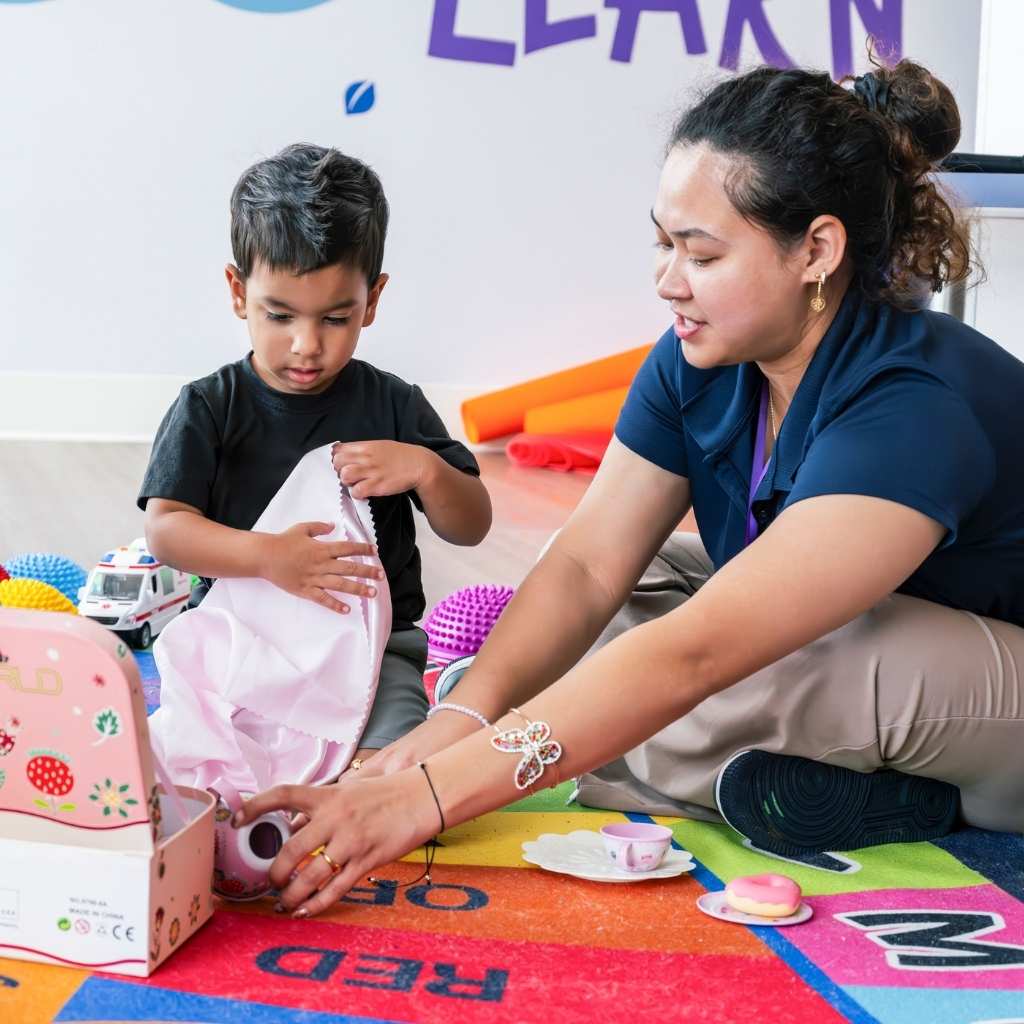
From there, ABA therapy goals are designed to improve skills that make everyday life easier, such as:
- Functional communication
- Social interaction
- Emotional regulation
- Daily living and self-care skills
- Play skills
- Safety awareness
As children develop, ABA therapy goals are reviewed regularly and updated to reflect new strengths and emerging needs. This ongoing process helps ensure therapy continues to support meaningful progress instead of focusing on the same objectives indefinitely.
Current research also emphasizes that individualized intervention and continuous adjustment of treatment plans contribute to better developmental outcomes for children receiving ABA services.
What To Expect in ABA Therapy During the First Few Months?
Knowing what to expect in ABA therapy can help families feel more confident as services begin.
During the first several weeks, therapists focus on understanding how your child learns, identifying effective teaching strategies, and building a positive relationship before expecting significant behavioral changes. This early stage creates the foundation for long-term success.
Parents can typically expect in ABA therapy:
- Individualized assessments and baseline data collection
- Play-based learning activities tailored to the child’s interests
- Frequent communication with the BCBA
- Regular review of ABA therapy goals as new skills emerge
- Ongoing adjustments based on the child’s ABA therapy progress
Although changes may seem gradual at first, understanding what to expect in ABA therapy helps families recognize that these early sessions are building the skills needed for continued growth.
How Do ABA Professionals Measure ABA Therapy Progress?
One reason ABA is considered an evidence-based intervention is that decisions are guided by objective data rather than assumptions. During every session, therapists collect information about how a child responds to instruction, practices new skills, and applies previously learned behaviors.
The supervising BCBA reviews this data regularly to evaluate ABA therapy progress and determine whether current teaching strategies remain effective or whether ABA therapy goals should be adjusted.
This ongoing process helps answer important questions, including:
- Is the child using a skill more consistently?
- Does the child need less support than before?
- Can the skill be used at home, school, and in the community?
- Should new ABA therapy goals be introduced?
This continuous evaluation allows therapy to evolve alongside the child rather than following a fixed plan.
A systematic review published by the National Center for Biotechnology Information (NCBI) also supports ongoing assessment and individualized treatment planning as important components of effective behavioral intervention.
Is It Normal for ABA Therapy Progress to Slow Down?

Yes. Understanding what to expect in ABA therapy also means recognizing that learning is rarely linear.
Children often experience periods where progress appears to slow before another developmental leap occurs. Changes in routine, school schedules, illness, or learning more complex skills can all temporarily affect performance.
Rather than viewing these moments as setbacks, BCBAs review the data, collaborate with families, and modify teaching strategies or ABA therapy goals when appropriate. These adjustments help maintain meaningful ABA therapy progress over time.
What Parents May Notice—and What It Often Means
Many families first recognize ABA therapy progress through everyday moments rather than major milestones. Let’s see some of the most recurrent ones:
What Parents Notice | What It Often Means |
Your child asks for help more often | Functional communication is improving |
Daily routines become easier | Independence is increasing |
Your child joins family activities more willingly | Social engagement is developing |
Transitions cause less frustration | Emotional regulation skills are improving |
Skills appear outside therapy sessions | Learning is generalizing to real-life situations |
These small victories often become the building blocks for larger developmental gains.
How Can Families Encourage Continued Progress?
Parents are an essential part of the therapy team. While clinicians guide treatment, children have countless opportunities to practice new skills during everyday routines at home and in the community.
To support ABA therapy progress, families can:
- Practice communication during daily activities
- Reinforce ABA therapy goals using strategies recommended by the BCBA
- Celebrate effort as well as achievement
- Share observations with the therapy team
- Maintain consistency by attending sessions and practicing skills between appointments
These simple habits help children apply new abilities across different environments while reinforcing the learning taking place during therapy.
Every Child’s Progress Deserves to Be Celebrated
Understanding what to expect in ABA therapy helps families focus on meaningful growth instead of comparing timelines. True ABA therapy progress is measured by steady improvements that help children communicate more effectively, participate more confidently in daily life, and become increasingly independent.
Because ABA therapy goals are individualized and continuously updated, every child’s journey is unique. What matters most is that progress continues, one meaningful step at a time.
If you’re wondering what to expect in ABA therapy or would like to learn how personalized services can support your child’s development, ABA Centers of New Jersey is here to help. Call (855) 640-7888 or visit our contact page to schedule a consultation with our experienced team.





 English
  Español