

Table of Contents
How Do You Explain Your Child’s Autism Diagnosis to Family Members?
Receiving an autism diagnosis can answer many questions about your child’s development, but it also introduces new conversations that many parents don’t expect. For many families, explaining autism to family becomes one of the first emotional milestones after receiving the diagnosis.
Grandparents may have questions. Siblings may notice differences but not understand them. Extended family and close friends often want to help, yet they may not know what autism really means or how to offer meaningful support. Some may unintentionally repeat outdated ideas or make comments that leave parents feeling frustrated or isolated.
The truth is that sharing an autism diagnosis doesn’t have to become a lesson in autism or a defense of your child’s needs.
Every family has the right to decide what to share, when to share it, and how much information feels appropriate. The goal isn’t to convince everyone immediately, but to build understanding one conversation at a time.
For families across New Jersey, creating that understanding can strengthen relationships and help children feel accepted by the people who matter most.
This guide from ABA Centers of New Jersey offers practical strategies for navigating these conversations with confidence while encouraging loved ones to become supportive partners in your child’s journey.
Why Explaining Autism to Family Can Feel So Emotional
Many parents expect the diagnostic process to be the hardest part. Instead, they discover that conversations with loved ones can be equally challenging.
Family members bring their own experiences, beliefs, and expectations about child development. Some have little familiarity with autism, while others may rely on information that is no longer accurate. Even comments made with good intentions can feel discouraging when they minimize a parent’s concerns or question a professional diagnosis.
The Cambridgeshire Community Services NHS Trust explains that relatives often want to support families after an autism diagnosis but may need guidance about what that support looks like. Honest, practical conversations can help loved ones feel more confident while reducing misunderstandings.
Rather than trying to explain autism, many parents find it more helpful to describe what it means for their own child.
Sharing an Autism Diagnosis Without Feeling Like You Need All the Answers
One of the biggest sources of stress is believing that every conversation needs a perfect explanation. It doesn’t.
Sharing an autism diagnosis is a personal choice, and your explanation can be as simple or detailed as you feel comfortable making it.
Instead of focusing on clinical definitions, try describing your child’s everyday experiences. For example:
“Our child experiences the world a little differently. Loud environments can feel overwhelming, routines help them feel secure, and they sometimes communicate in ways that aren’t immediately obvious to others.”
This type of explanation is often easier for family members to understand because it connects the diagnosis to the child they already know.
You can also remind loved ones that autism is a spectrum. Every child with autism has different strengths, interests, communication styles, and support needs. Comparing your child to another child on the spectrum—or to stories they’ve heard online—is rarely helpful.

Research examining interactions between autistic children and their families highlights how supportive family relationships contribute to healthier communication, stronger emotional connections, and more positive experiences for both children and caregivers
Keep In Mind: Every Conversation Doesn’t Need Every Detail
Not every relative needs the same information.
A grandparent who helps with childcare may benefit from understanding your child’s routines, sensory preferences, and communication style. A distant family member may simply need to know that your child experiences the world differently and appreciates patience.
It’s also perfectly acceptable to set boundaries.
If someone asks questions that feel too personal, you might simply say:
“We’re still learning ourselves, but we appreciate your support as we move forward.”
Protecting your family’s privacy doesn’t make you less open; it allows you to have conversations at a pace that feels comfortable while keeping the focus where it belongs: supporting your child.
Explaining Autism to Family Across Different Relationships
Every family member will process an autism diagnosis differently. Understanding this can help you approach conversations with patience while setting realistic expectations.
Grandparents
Grandparents often want to help but may rely on information that is decades old. Rather than trying to correct every misconception, focus on helping them understand your child as an individual.
When sharing an autism diagnosis with grandparents, emphasizing your child’s unique personality often helps them move beyond stereotypes and focus on understanding their grandchild.
Share both your child’s strengths and the supports that help them succeed. For example, you might explain that they enjoy music, puzzles, or imaginative play while also benefiting from predictable routines or quieter environments.
Siblings, Extended Family, and Friends
Brothers and sisters usually benefit from honest, age-appropriate conversations that encourage empathy without placing responsibility on them.
Likewise, aunts, uncles, cousins, and close friends don’t need to know every clinical detail. Instead, explain simple ways they can make interactions more comfortable, such as giving your child extra time to respond, respecting routines, or avoiding sensory overload when possible.
Responding to Difficult Comments with Confidence
Even supportive relatives may occasionally make comments that feel discouraging.
Instead of feeling pressured to defend your child, try responding with calm, factual statements.
- If someone says, “They’ll grow out of it,” you might respond:
“Autism isn’t something children outgrow, but with the right support they continue learning and developing throughout life.”
- If someone says, “They don’t seem autistic,” you could explain:
“Autism looks different in every person, which is why it’s called a spectrum.”
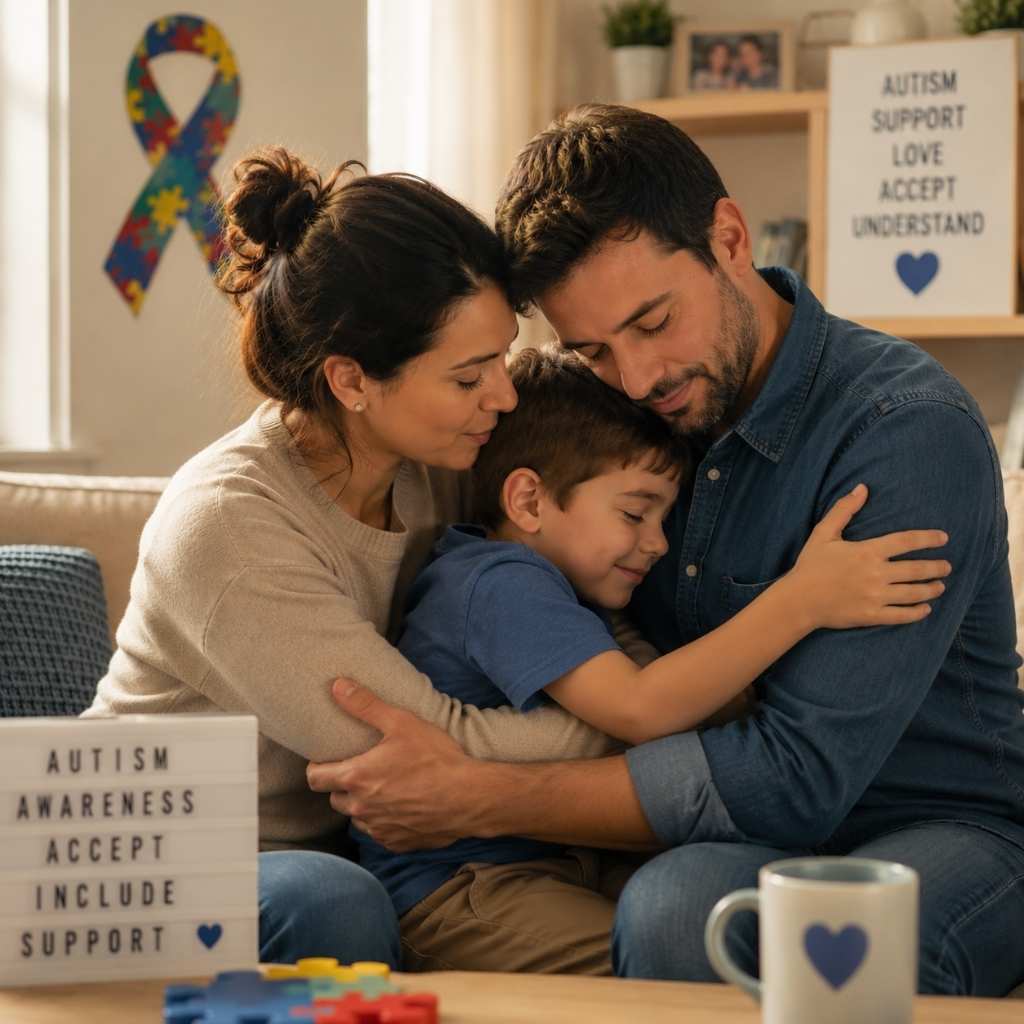
Remember, you don’t have to answer every question or change someone’s perspective in a single conversation. Sometimes, simply planting the seed for greater understanding is enough.
A review published in Clinical Epidemiology and Global Health notes that informed, supportive family relationships can positively influence both children and caregivers, reinforcing the importance of open communication after diagnosis.
Autism Awareness Begins at Home
Many people think of autism awareness as something that happens through campaigns or community events. In reality, it often begins within the family.
Autism awareness grows when loved ones understand how to support your child in everyday situations.
This type of awareness encourages acceptance through everyday actions instead of assumptions or outdated beliefs. Small actions can make a meaningful difference, including:
- Respecting your child’s routines
- Giving them time to communicate
- Following parents’ guidance during visits
- Avoiding comparisons with other children
- Celebrating progress, no matter how small
These everyday choices help create an environment where children feel accepted and understood.
Research published in Frontiers in Psychiatry suggests that strong family support contributes to caregiver resilience and can improve the overall well-being of families raising children with autism.
Building a Stronger Support System with ABA Centers of New Jersey
Explaining autism to family is an ongoing process, not a single conversation. As you become more comfortable, loved ones often become more confident in supporting your child.
Some relatives will immediately embrace the information, while others may need time to learn. That’s perfectly normal. Continue sharing what feels comfortable, establish healthy boundaries when needed, and remember that sharing an autism diagnosis is your family’s decision—not an obligation.
For families throughout New Jersey, a supportive network can make everyday life more manageable and help children thrive in the places where they feel most loved.

At ABA Centers of New Jersey, we’re committed to helping families long after the diagnostic process. Whether you’re sharing an autism diagnosis for the first time or seeking guidance as your child grows, our team is here to support you every step of your journey.
Through comprehensive autism evaluations, individualized ABA therapy, and ongoing collaboration with parents, we provide the guidance families need every step of the way.
To learn more or schedule a free consultation, call ABA Centers of New Jersey at (855) 640-7888 or click here to contact us. We’re here to help your family move forward with confidence and compassionate support.



 English
  Español