
Table of Contents
Receiving an autism diagnosis for your toddler can bring a mix of emotions. Many parents feel relieved to finally have answers, but they also wonder what comes next. One of the most common concerns is communication. Will my child learn to express their needs? Will they be able to connect with others? How can I support their growth?
Understanding the connection between autism and language development is often one of the first steps toward finding effective support. While every child develops differently, early intervention can play an important role in helping children build meaningful communication skills.
Applied Behavior Analysis (ABA) therapy is one of the most researched and widely used interventions for people with autism.
Keep reading this blog by ABA Centers of New Jersey to learn how individualized strategies can help toddlers strengthen communication, increase independence, and develop skills that support lifelong success.
How Does Language Development in Children With Autism Work?
Language development varies greatly among young children. Some toddlers begin speaking in short phrases early on, while others rely on gestures, sounds, or alternative forms of communication before developing verbal language.
When discussing autism and language development, it is important to remember that autism affects communication differently from one child to another. According to the National Autistic Society, people with autism may experience challenges with understanding social communication, interpreting nonverbal cues, initiating conversations, or expressing their thoughts and needs.
Language development in children with autism follows diverse pathways. Some children develop spoken language later than expected, while others communicate effectively through gestures, visual supports, or augmentative communication systems.
A review published through the National Library of Medicine explains that communication development in children with autism is highly individualized and can involve a variety of strengths and challenges across language, social interaction, and adaptive functioning.
For parents, this means that delayed speech does not automatically predict a child’s long-term communication potential. Understanding autism and language development requires looking at the broader picture of how children learn to connect, express themselves, and interact with the world around them.
Why Communication Matters Beyond Words
Communication is about much more than talking. It includes making requests, sharing interests, expressing emotions, asking questions, and building relationships.
According to the National Institute on Deafness and Other Communication Disorders (NIDCD), speech and language involve a variety of skills, including understanding language, using words effectively, processing information, and engaging in meaningful interactions with others.
For many families, improving communication becomes a priority because it can reduce frustration, support emotional regulation, and strengthen connections with caregivers, peers, and teachers. As language development in children with autism progresses, children often gain more opportunities to participate in family activities, social interactions, and learning experiences.
This is where ABA therapy and communication strategies can make a significant difference.
How ABA Therapy and Communication Skills Work Together
One of the primary goals of ABA therapy and communication interventions is to help children develop functional ways to express their wants, needs, thoughts, and feelings.
Rather than focusing exclusively on speech, ABA professionals assess how a child currently communicates and create individualized goals based on their strengths and needs. For some toddlers, that may involve learning to request favorite toys or activities. For others, it may mean improving social engagement, responding to their name, or using gestures more effectively.
ABA therapists often help toddlers learn to:
- Request preferred items or activities
- Follow simple instructions
- Use gestures, signs, or visual supports
- Develop early social communication skills
- Build vocabulary and expressive language
- Improve listening and comprehension skills
- Engage in turn-taking and shared attention
- Communicate during everyday routines
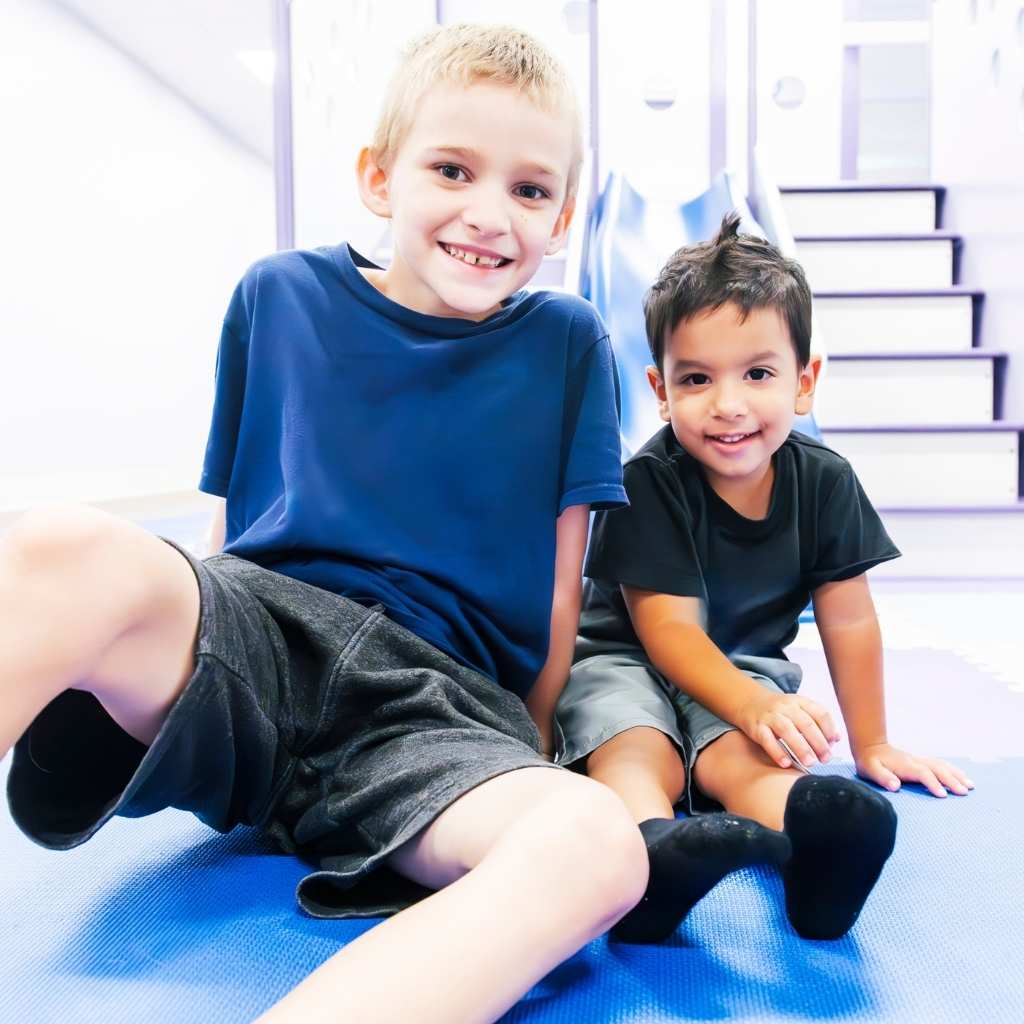
Because ABA therapy and communication plans are individualized, therapists can teach communication skills in ways that feel meaningful and motivating for each child.
Research has also shown that parent involvement plays an important role in positive developmental outcomes. For example, a recent study published in the National Library of Medicine highlights how family-centered interventions can improve parental confidence and support children’s developmental progress.
As a result, ABA therapy and communication strategies often extend beyond therapy sessions, empowering parents to reinforce communication skills during meals, playtime, community outings, and other daily activities.
Can Communication Improve Even if Speech Is Delayed?
Yes. One of the most encouraging findings in research on autism and language development is that communication can improve even when spoken language develops later than expected.
Many children first learn to communicate through:
- Pointing
- Gestures
- Sign language
- Picture-based systems
- Communication devices
- Facial expressions
- Visual supports
These skills create opportunities for interaction and help children understand that communication is powerful and rewarding.
When discussing language development in children with autism, professionals increasingly recognize that successful communication may take many different forms.
A child who learns to effectively request help, share interests, express preferences, or engage socially is making meaningful progress regardless of whether those skills are verbal or nonverbal.
Through structured teaching and positive reinforcement, ABA therapy and communication interventions can help children strengthen these foundational abilities and build toward more advanced communication skills over time.
Can ABA Therapy Replace Speech Therapy for a Toddler?
This is one of the most common questions parents ask after receiving a diagnosis.
In most cases, ABA therapy is not intended to replace speech therapy. Instead, the two services often work together to support a child’s development.
Speech-language pathologists specialize in speech production, language development, articulation, and communication disorders. ABA professionals focus on teaching functional skills, including communication, through evidence-based behavioral strategies:
Speech-Language Pathologist | ABA Specialist |
Focuses on speech production, articulation, receptive and expressive language, and communication disorders. | Focuses on teaching functional communication and daily living skills through evidence-based behavioral strategies. |
May help a toddler pronounce sounds, expand vocabulary, understand language, and use words or alternative communication systems more effectively. | May help a toddler use communication skills to request needs, follow instructions, participate in routines, and interact with others. |
Addresses how a child forms, understands, and uses language across verbal and nonverbal communication. | Addresses how a child applies communication in real-life situations by reinforcing meaningful and practical behaviors. |
Often works on foundational speech and language goals during structured therapy sessions. | Often supports skill generalization by practicing communication during everyday activities, play, transitions, and social interactions. |
Can recommend or support tools such as gestures, visual supports, signs, or communication devices when appropriate. | Can incorporate those communication tools into daily routines and reinforce their consistent use across environments. |
For many children, combining speech therapy with ABA therapy and communication goals creates a comprehensive approach to support growth.
This collaborative model can support stronger outcomes in language development in children with autism while helping children generalize communication skills across multiple environments.
How ABA Therapy Helps Children with Autism Thrive
Communication is often the starting point, but the benefits of ABA therapy can extend much further.
As children gain communication skills, they may also experience improvements in:
- Independence
- Social engagement
- Emotional expression
- Daily living skills
- Learning readiness
- Self-confidence
- Adaptability in new environments
Understanding autism and language development means recognizing how communication influences nearly every aspect of a child’s life. When children can express themselves more effectively, they often experience greater confidence, long-term success, and more opportunities to participate in the world around them.
Similarly, progress in language development in children with autism can strengthen family relationships, increase participation in community activities, and help children feel more connected to the people around them.
Helping Your Toddler Take the Next Step
After a diagnosis, it is natural to have questions about your child’s future. The encouraging news is that early intervention can help many children strengthen communication skills, increase independence, and develop the confidence needed to succeed at home, in school, and in their communities.
At ABA Centers of New Jersey, our team provides individualized ABA therapy designed to support communication, social development, and everyday life skills.
If you’re exploring treatment options and want to better understand which approach may be right for your child, contact ABA Centers of New Jersey today to schedule a consultation by clicking here or by calling us at (855) 640-7888.
Together, we can help your family build a path forward that supports communication, confidence, and long-term growth.


 English
  Español