



Table of Contents
How Everyday Moments Can Reinforce ABA Skills
Therapy sessions provide important opportunities for children with autism to build new skills, but most of a child’s learning happens in everyday life.
Parents typically do not require specialized equipment or expert clinical training, nor do they need to learn how to perform ABA therapy professionally at home. While some parents may benefit from caregiver training for their child’s specific needs, learning ABA techniques for parents can enable them to support skill development in simple, natural ways within daily routines and interactions, without becoming therapists.
If you want to understand how small changes in the way you respond, communicate, or structure an activity can create more opportunities for your child to practice skills, continue reading this blog by ABA Centers of New Jersey.
6 ABA Techniques for Parents to Use During Everyday Routines
Clinical teams and ABA professionals can help parents incorporate ABA therapy strategies into their everyday routines at home. These may include positive reinforcement, visual supports, offering choices, breaking skills into smaller steps, modeling behaviors, allowing time to respond, and creating natural opportunities to practice skills. Your child’s BCBA can help you determine which strategies fit their individual goals.
At ABA Centers of New Jersey, we have compiled 6 ABA techniques for parents to use in their daily routines, without needing to learn how to do ABA therapy at home by themselves:
1. Use Positive Reinforcement
Positive reinforcement involves providing something meaningful after a behavior or skill to increase the likelihood that the behavior or skill will occur again.
For a child, reinforcement might include specific praise, attention, a high-five, or access to a preferred activity. What matters is that the response is genuinely meaningful to that child.
It can also help to make praise specific, like “You put your shoes away!” This connects the positive response directly with the skill you want to encourage. Your BCBA can help you understand what may be reinforcing for your child and how to use reinforcement appropriately without making every interaction dependent on a reward.
2. Make Routines Clearer with Visual Supports
For some children with autism, visual supports can make expectations more concrete and help them understand the transition between activities.
You can also pair visuals with language. Naming an object or action while your child can see it creates another connection between the word and its meaning. That way, visual information can provide additional context and make routines or communication easier to understand.
3. Offer Simple Choices
Choices can create natural opportunities for children to communicate preferences and participate more actively in everyday decisions.
Rather than asking an open-ended question, present two manageable options. Depending on the child’s communication skills, they may respond by speaking, pointing, reaching, using a picture, or communicating through an AAC system.
Appropriate choices can support communication, self-advocacy, participation, and growing independence.
4. Break New Skills Into Smaller Steps
Some everyday skills involve small steps that may feel like a single task to an adult. For a child who is still learning, completing the entire sequence at once may be challenging.
Task analysis is one of the most widely used ABA therapy strategies; it breaks a larger skill into smaller, more manageable steps. Breaking skills down can make expectations clearer and help children build confidence as they progress.
5. Model Skills and Give Your Child Time to Respond
Children often learn by watching what other people do. Modeling means showing a skill or behavior in context before expecting the child to do it independently.
After modeling or giving an instruction, allow your child time to process and respond. A simple sequence may look like this:
- Model: Show the action or give a short, clear direction.
- Pause and wait: Give your child time to process and try to respond.
- Offer appropriate help or move on: If needed, provide the level of support recommended by the care team or try again later.
The interaction should remain low pressure. Repeating a request over and over can make practice stressful. Sometimes a child needs more processing time or additional support.
6. Practice Skills During Everyday Routines
ABA techniques for parents can be incorporated into everyday family activities, giving children opportunities to practice important skills in situations where they naturally need and use them. For example:
- Use snack time to practice requesting or making choices
- Support independence and the ability to follow a sequence while getting dressed
- Practice communication, imitation, or turn-taking during playtime
- Clean-up to practice familiar routines
Your child’s BCBA can help identify a few meaningful moments to reinforce current goals in ways that fit naturally into family life.
How Do ABA Therapy Strategies Help Skills Carry Over at Home?
Learning ABA therapy strategies to practice skills outside therapy sessions gives children opportunities to use what they are learning with different people and in different situations. In ABA, this is called generalization.
A skill becomes more useful when a child can apply it beyond the original teaching situation. For example, learning a communication skill with a therapist is one step. Over time, the child may also need opportunities to use that skill with parents, siblings, teachers, or other people.
Families can support this process by reinforcing skills already included in the child’s plan and following the ABA team’s guidance on how to encourage them appropriately.
This does not require adding extra therapy sessions at home. Everyday experiences provide meaningful opportunities for learning because they occur in the environments where children naturally use and develop new skills. Practicing in real-life situations can help children become more comfortable applying what they have learned from the ABA therapy strategies.
A 2025 systematic review of parent-mediated naturalistic developmental behavioral interventions examined randomized controlled trials in which caregivers learned strategies to support young children with autism in their natural settings. The findings demonstrate that when parents use individualized strategies in everyday routines, children show measurable gains in communication, adaptive skills, and skill generalization across environments.
Do Parents Need to Know How to Do ABA Therapy at Home?

No. Parents do not need to know how to do ABA therapy at home, recreate formal sessions, or become their child’s therapist. Qualified professionals should lead clinical assessments, treatment planning, and formal ABA programs. Parents can instead collaborate with the ABA team and use appropriate ABA therapy strategies to reinforce their child’s goals during everyday life.
That distinction matters.
Parents know their children in ways clinicians cannot. You see what happens across different situations, recognize preferences and emerging strengths, and may notice patterns that do not appear during therapy. That perspective makes you an important member of the team.
Clinical research on parent-led behavioral interaction strategies evaluated parent-child interactions in children with autism aged 4 to 10 years. The study found that families who received behavioral training showed improvements in parent-child interactions and reductions in disruptive behavior. Parents also reported lower levels of stress and higher child compliance.
The purpose of professional guidance is to help families identify manageable strategies that make sense for their child—not hand parents a long list of techniques they are expected to implement independently.
How Your ABA Team Can Help You Choose the Right ABA Therapy Strategies
The most useful ABA techniques for parents are those connected to a child’s current goals and adapted to the realities of family life.
A BCBA can help you understand which skills your child is developing, what strategies are being used during therapy, and how you might reinforce those skills outside sessions. They can also adjust an approach if something does not seem to be working as expected.
You can bring your own observations to these conversations. Let the team know what feels manageable, where you are noticing progress, and which situations remain challenging.
Sometimes, a useful question is:
“What’s one thing we could practice at home this week?”
One manageable strategy that fits into your family’s routine may be more useful than trying to change many things at once.
Find Everyday Opportunities To Support Your Child’s Progress with ABA Centers of New Jersey
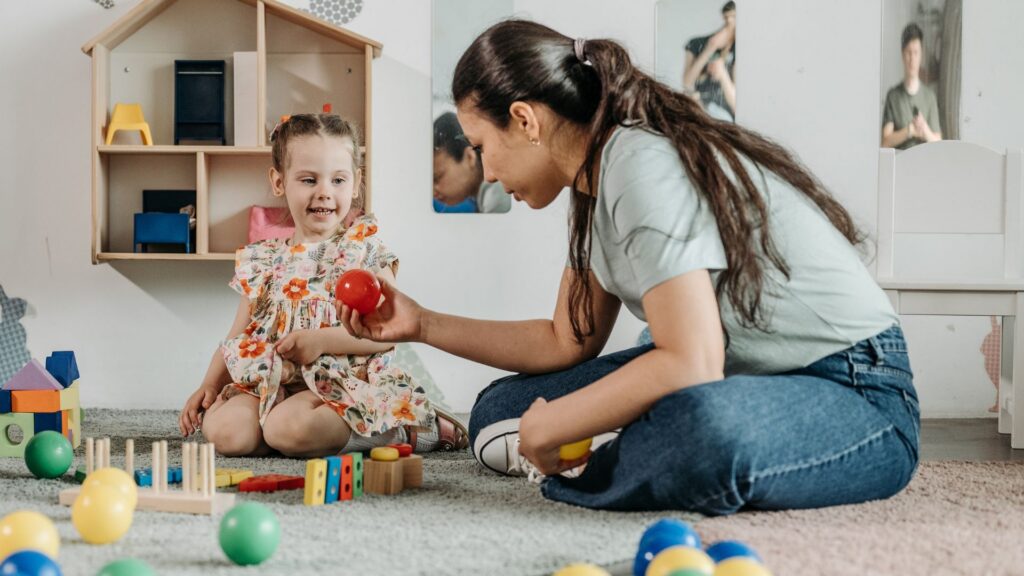
Supporting your child’s development does not require turning your home into a therapy setting. Small, consistent opportunities to communicate, make choices, build independence, and practice developing skills can complement the work your child is already doing with their professional team.
Some days those opportunities will come easily. Other days, family life simply needs to be family life. Consistency matters, but consistency doesn’t mean perfection.
At ABA Centers of New Jersey, we believe parents should feel supported in their role, not responsible for becoming therapists. With individualized guidance from your child’s care team, ABA techniques for parents can become practical tools that fit into the moments you already share and help your child continue building meaningful skills over time.
If you need guidance throughout this process, our team is here to help you take the next step with confidence. Reach out via our website or call (855) 640-7888 to schedule a free consultation.