

Tabla de contenido
Learning about the many types of therapy for autism can quickly lead to more questions. Should your child start ABA first? What about speech or occupational therapy? Is the best therapy for autism one specific approach or a combination?
For New Jersey families, the most useful starting point is not trying to schedule every available service. It is identifying which needs are affecting your child’s communication, learning, independence, safety, or daily participation right now.
That perspective can make autism therapy options easier to evaluate. Keep reading this guide by ABA Centers of New Jersey to learn how different supports may fit into a care plan and how to prioritize them without losing sight of childhood itself. Let’s dive in!
Is There One Best Therapy for Autism?
No single approach is automatically the best therapy for autism for every child. Children with autism can have very different strengths, support needs, developmental profiles, and priorities.
Recent research on emerging autism therapeutics reinforces this point. Behavioral and psychosocial interventions remain important first-line approaches, while care is becoming increasingly personalized and developmentally informed. The review also notes that newer approaches, including digital tools, neuromodulation, and gene-targeted therapies, still require careful validation.
That is why comparing types of therapy for autism should begin with a child’s individual profile rather than a universal ranking. The best therapy for autism is the support—or combination of supports—that addresses meaningful needs with appropriate evidence and clearly defined goals for your child.
Which Autism Therapy Options Address Different Needs?
Different autism therapy options target different areas of development and everyday functioning:
Need or Goal | Support That May Be Considered |
Speech-language therapy, ABA | |
Learning, behavior, transitions, adaptive skills | |
Fine motor, self-care, sensory-related participation | Occupational therapy |
Classroom access and participation | School-based services and accommodations |
Co-occurring anxiety or mental health concerns | Qualified psychological services |
Associated medical symptoms | Medical care guided by a qualified physician |
A recent Brain Sciences review of therapeutic approaches for autism emphasizes the importance of evidence-based, individualized, and multidimensional intervention. For parents, the practical takeaway is that autism therapy options should have a clear purpose rather than simply adding more services.
Which Type of Therapy Should a Child Start First?
Among the many types of therapy for autism, the priority should generally be the support that addresses the most meaningful current need identified through assessment and family input. There is no universal sequence.
If communication barriers make it difficult for a child to express basic needs, communication-focused support may become a priority. If behaviors interfere with safety, learning, or everyday routines, ABA may play an important role. If motor, self-care, or sensory-related differences limit participation, an occupational therapy evaluation may be useful.

Research focused on autism in children and early therapeutic intervention highlights the value of early, individualized support. Rather than searching for the best therapy for autism in the abstract, parents can ask: “Which skill would make the biggest functional difference for my child right now?”
Where Does ABA Fit Among the Types of Therapy for Autism?
ABA is one of the most established behavioral autism therapy options. It uses principles of learning and behavior to build skills and understand factors influencing behavior, with goals tailored to the individual child.
Depending on the child, ABA may support communication, play, social participation, transitions, self-care, school readiness, safety, and adaptive skills. Progress is measured so the treatment team can adjust goals and strategies when needed.
ABA and naturalistic developmental behavioral interventions are among the major behavioral approaches. For families considering the best therapy for autism, this does not mean ABA replaces speech therapy, occupational therapy, educational services, or medical care. Its role depends on the goals it is intended to address.
Can Children Use Several Autism Therapy Options at the Same Time?
Yes. Some children benefit from several autism therapy options when each service addresses a distinct need. However, more therapy does not automatically mean a better plan.
An SLP and a behavior analyst may both support communication from different professional perspectives. An occupational therapist may identify motor or sensory-related factors affecting independence. When several providers are involved, communication can help keep goals complementary.
A comprehensive review of available autism treatments discusses both pharmacological and nonpharmacological approaches while stressing the value of personalized treatment. It also points to limitations in the evidence behind several emerging strategies. When families compare types of therapy for autism, asking what evidence supports a recommendation matters.
Can Too Much Therapy Become Overwhelming?
It can. Even when several autism therapy options are appropriate, a child still needs time for school, play, family relationships, rest, interests, and community life.
This is where the question of the best therapy for autism becomes especially personal. Families and providers should consider not only whether a service has a clinical purpose, but whether the overall plan remains manageable and meaningful.
Parents can ask:
- What specific goal does this therapy address?
- How will progress be measured?
- Does another provider already address a similar goal?
- When will this service be reassessed?
- Does my child still have time for everyday childhood experiences?
These questions can help families prioritize types of therapy for autism without treating every available service as mandatory.
When Should an Autism Therapy Plan Change?
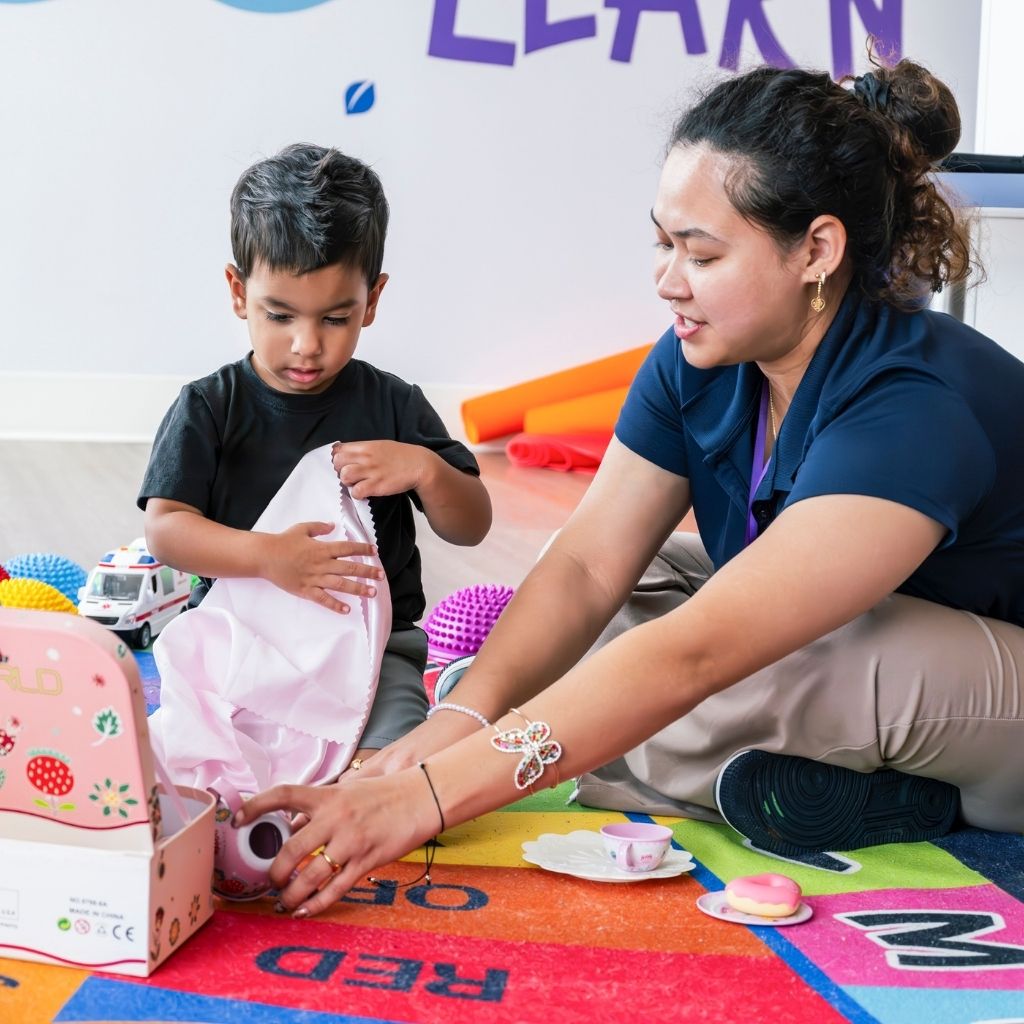
Autism therapy options should evolve as children develop new skills, enter different environments, and encounter new expectations. A plan that makes sense at age three may not be the same one a child needs later.
Regular reassessment can help determine whether goals should change, a service should become more or less intensive, or another professional should address a new need.
For New Jersey families from Bergen and Hudson counties to Middlesex, Monmouth, Burlington, and Gloucester counties, the goal remains the same: support that reflects the child in front of you, not a generic checklist. ABA Centers of New Jersey currently serves families across these and other counties throughout North, Central, and South Jersey.
Find Individualized ABA Support for Young Children in New Jersey
Choosing among the many types of therapy for autism can feel like a major responsibility, but parents do not have to identify every answer at once. Start with the needs affecting everyday life, ask what each recommendation should accomplish, and look for professionals who can explain how they will evaluate progress.
En ABA Centers of New Jersey, we recognize that families may be considering several autism therapy options as they build a broader support plan. When ABA is appropriate, our team creates individualized goals based on assessment results, the child’s current needs, and family priorities.
If you are wondering whether ABA could be the best therapy for autism for your child’s current goals, contact ABA Centers of New Jersey by clicking here or call (855) 640-7888. With several locations throughout the New Jersey area, our team can help you understand the next steps and explore personalized ABA support tailored to your child’s needs.






 Español
  English