

Tabla de contenido
How Is Autism Diagnosed in Young Children?
Every parent notices little things about their child that others may miss. Maybe your toddler avoids eye contact, struggles to communicate their needs, or becomes overwhelmed by sounds and changes in routine.
Searching online for answers can feel overwhelming, especially when parents are already worried and emotionally exhausted. However, understanding how autism testing and screening work can help families feel more informed and supported during the process.
An autism test is not one single medical exam or questionnaire. Instead, professionals use several tools and evaluations as part of autism testing and screening to better understand a child’s development. According to the Centers for Disease Control and Prevention (CDC), specialists evaluate communication, behavior, social interaction, and developmental milestones when considering autism diagnosis in early childhood.
This process may include:
- Developmental screenings
- Parent interviews
- Behavioral observations
- Speech and communication assessments
- Cognitive evaluations
Professionals involved in autism diagnosis in early childhood may include developmental pediatricians, psychologists, neurologists, and behavioral specialists.
For parents, it is important to remember that the goal of an evaluation is not to label a child negatively. The purpose is to better understand how to support the child’s development and overall well-being.
Keep reading this guide by ABA Centers of New Jersey and learn more about the autism testing and screening journey, step by step!
Understanding the Steps in Autism Testing and Screening
Searching for an autism test online can feel confusing because every child develops differently. However, understanding the step-by-step process of autism testing and screening can make the experience feel less intimidating for families.
Step 1: Parents Notice Early Developmental Differences
For many families, the journey toward autism diagnosis in early childhood begins with small observations at home.
A child may not respond consistently to their name, avoid social interaction, repeat certain movements, or experience strong reactions to sounds and textures. Other children may have delayed speech or difficulty expressing emotions.
These signs do not automatically mean a child has autism. Still, discussing developmental concerns with a healthcare provider is an important first step.
Step 2: Pediatric Developmental Screening
The next step in autism testing and screening often happens during routine pediatric visits.
Doctors may ask questions about communication, behavior, social interaction, and developmental milestones. Pediatricians commonly perform screenings around 18 and 24 months old as part of recommended developmental care.
Según Autism Speaks, screenings help identify whether a child may benefit from further evaluation. However, a screening alone cannot provide a formal diagnosis.
This distinction is important because many parents mistakenly believe a screening result immediately confirms autism.
What Is the Difference Between an Autism Screening and an Autism Diagnosis?
An autism screening is a brief tool used to identify developmental concerns that may require additional evaluation.
A formal autism diagnosis in early childhood, however, involves a more comprehensive assessment performed by specialists trained in developmental disorders.
According to the UK’s National Autistic Society, professionals use evidence-based diagnostic criteria to evaluate communication patterns, repetitive behaviors, sensory responses, and social interaction.
Understanding this difference can help families approach autism testing and screening with more clarity and realistic expectations.
Step 3: Comprehensive Autism Evaluation
If developmental concerns persist, specialists may recommend a comprehensive evaluation as part of autism testing and screening.
During this stage, professionals observe how the child:
- Communicates verbally and nonverbally
- Responds socially
- Engages in play
- Adapts to routines and transitions
- Processes sensory experiences

La Autism Research Institute explains that evaluations may also include speech assessments, developmental histories, and cognitive testing.
For many parents, this stage of autism diagnosis in early childhood can feel emotional. Some families feel worried, while others feel relieved to finally receive answers. Both reactions are completely normal.
Is an Online Autism Test Accurate?
Many parents search online for a quick autism test while waiting for professional evaluations.
Although online tools may help families recognize developmental differences associated with autism, they cannot replace professional autism testing and screening.
Online assessments cannot:
- Observe children in real-life settings
- Evaluate developmental complexity
- Rule out other developmental conditions
- Provide a formal diagnosis
For this reason, online autism tests should only be viewed as informational tools, not definitive medical answers.
The most reliable path toward autism diagnosis in early childhood is seeking guidance from qualified healthcare professionals.
Step 4: Receiving an Autism Diagnosis and Exploring Support
Receiving an autism diagnosis in early childhood often brings a mix of emotions for families.
Some parents feel uncertainty about the future, while others feel relief after finally understanding their child’s developmental needs more clearly.
Importantly, a diagnosis can help families access meaningful resources, therapies, and educational support that help children with autism grow and thrive.
The earlier autism testing and screening lead to intervention, the sooner families can begin building supportive routines and developmental strategies.
Step 5: Beginning Early Intervention and ABA Therapy
After an diagnóstico de autismo in early childhood, many families explore therapies that strengthen communication, social interaction, and independence.
Applied Behavior Analysis (ABA) therapy is one of the most widely recognized evidence-based interventions for children with autism. ABA therapy helps children build meaningful skills through individualized, supportive strategies tailored to their unique needs.
ABA therapy may help children improve:
- Habilidades de comunicación
- Emotional regulation
- La interacción social
- Daily routines
- Adaptive learning skills
Importantly, modern ABA therapy focuses on helping children with autism gain confidence and independence while supporting their individuality and strengths.
Research consistently shows that early intervention can positively impact developmental outcomes, making early autism testing and screening especially important for families seeking support.
Supporting Your Child Starts with Understanding
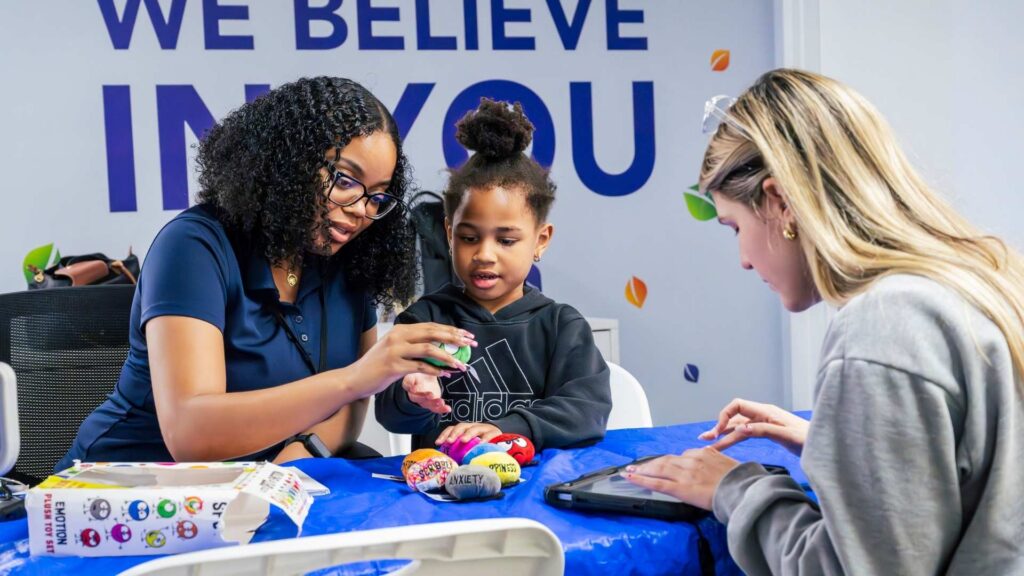
Searching for an autism test can feel overwhelming, but parents do not have to navigate the process alone.
Understanding how autism testing and screening work can help families make informed decisions while reducing uncertainty and fear. More importantly, early support can help children with autism build lifelong skills that improve communication, confidence, and quality of life.
An autism diagnosis in early childhood is not about limiting a child’s future. It is about identifying the support systems that can help children thrive.
The Support That Your Family Needs with ABA Centers of New Jersey
If you have concerns about your child’s development, seeking professional guidance early can help provide clarity and reassurance.
If you need an official autism diagnosis or wish to learn more about our ABA therapy services, call ABA Centers of New Jersey at (855) 640-7888 for a free consultation or contact us online by clicking here.
Our team is committed to helping families better understand autism testing and screening while supporting children with autism through compassionate, individualized care.





 Español
  English