

What Are the Signs of Autism At 12 Months?
At 12 months, early signs of autism tend to appear as subtle differences in how a child communicates, interacts, and responds to their environment. Parents may notice limited eye contact, reduced response to their name, fewer gestures (like pointing or waving), or less interest in social interaction.
While these signs may not confirm an autism diagnosis on their own, they can signal the need for closer observation.
Watching your child grow during the first year of life can feel exciting and sometimes overwhelming. Around the 12-month mark, parents pay close attention to developmental milestones, especially communication and social behaviors.
You may find yourself comparing your child to others or wondering if certain behaviors are typical. Many families start noticing those small differences at this stage, especially when looking for early signs of autism in babies, and asking questions early can make a meaningful difference in the future.
Why 12 Months Is an Important Stage for Development
The first year of life is critical in when it comes to shaping how children connect with others and explore their surroundings. By 12 months, many toddlers begin to show clear signs of social communication and engagement.
According to the CDC’s developmental milestone guidelines, most children at this age start to respond to their name, use simple gestures, and engage more actively with the people around them.
At this stage, most children:
- Turn when their name is called
- Use gestures like pointing, waving, or reaching
- Make eye contact and respond to facial expressions
- Show interest in people, not just objects
- Begin simple back-and-forth interactions, like babbling or smiling
These early skills form the foundation for language, relationships, and learning. When a child shows differences in several of these areas, it may be worth taking a closer look and wondering if they may be signs of autism at 12 months.
6 Early Signs of Autism at 12 Months
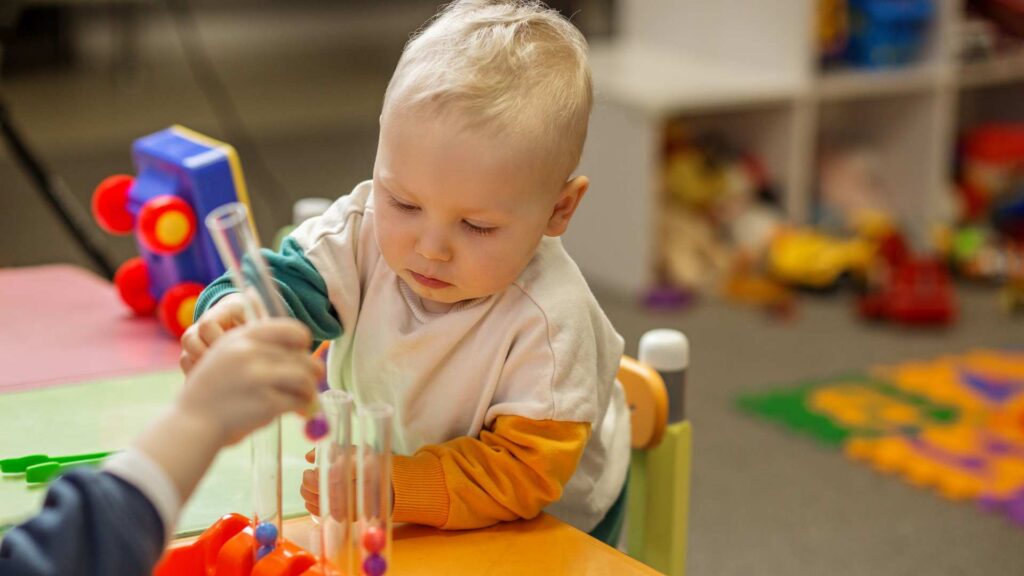
Every child develops at their own pace, but certain patterns at 12 months may indicate the need for evaluation. Parents researching autism signs often notice differences in communication and behavior.
According to the National Institute of Child Health and Human Development, early signs of autism often appear during the first year of life and typically involve differences in social interaction, communication, and behavior.
1. Limited Eye Contact and Social Engagement
Some children may make less eye contact or seem less interested in faces. You might notice your child focuses more on objects than people or doesn’t show interest in looking towards you during interactions.
2. Reduced Response to Their Name
By 12 months, most children respond consistently when their name is called. If your child rarely turns, even after multiple attempts, it may be worth observing over time.
3. Fewer Gestures and Nonverbal Communication
Gestures are one of the first ways children communicate. A child who does not point, wave, or reach to be picked up may be showing delays in communication development.
4. Limited Babbling or Vocal Interaction
At this age, many children babble frequently and try to imitate sounds. A noticeable lack of vocalization or minimal attempts to communicate through sounds can be one of the early signs of autism at 12 months.
5. Less Interest in Shared Attention
Shared attention happens when a child looks at something and then looks back at you to “share” the experience. For example, pointing at a toy and then looking at the parent. If your child does not attempt this type of interaction, it may indicate a difference in social development.
6. Unusual Focus or Repetitive Behaviors
Some children may show a strong interest in specific objects or repeat certain movements, such as spinning items or watching objects move in repetitive ways. Occasional repetition is typical, but consistent patterns may be worth noting.
If you’d like a quick visual reference on signs of autism, you can review this Autism Fact Sheet to better understand early signs, key facts, and how support can make a difference.
What Is Typical vs. What May Be a Concern?
Development is not always linear. Some children reach milestones earlier, while others take more time.
A single missed milestone does not necessarily indicate autism. However, patterns over time matter more than isolated behaviors.
You may want to take a closer look if your child:




 English
  Español