
How to Help a Child with Autism Tolerate a Car Seat?
If you have ever attempted to buckle your child with trastorno del espectro autista (ASD) into their car seat, only to encounter panic, tears, or outright resistance, you are not alone.
Many families navigating car seat sensory issues in autism know the challenge well, and it can leave you feeling stressed, confused, and even guilty, especially when you’re just trying to keep your child safe.
En ABA Centers of New Jersey, we hear this every day from families in Woodstown, Trenton, Paterson, and communities across the state. And truly, nothing is wrong with your child, and nothing is wrong with you. Autism and car seat refusal are more common than most people realize.
When a child experiences autism and car seat refusal, even a short drive can feel like a giant emotional hurdle. You might wonder, “Why does the car seat trigger such a strong reaction?” or “Is my child afraid?” or the most common question we hear: “How to help a child with autism tolerate a car seat?”
The quick answer: It starts with understanding that your child isn’t resisting you; they’re resisting discomfort, overwhelm, or sensations that feel much bigger to them than they look from the outside.
In this guide created by ABA Centers of New Jersey, you’ll learn why these challenges happen, what you can do in the moment, and how to build long-term comfort. We will also discuss how tools like La terapia ABA can make car rides feel safer and more manageable. Let’s take this one step at a time.
Why Do Car Seat Sensory Issues in Autism Happen?
If you’ve ever watched your child react as soon as they see the car seat, it can feel like flipping a switch. But beneath that reaction are several real and valid reasons, especially tied to car seat sensory issues in autism.
Sensory discomfort that feels overwhelming
For some kids, the harness feels too tight. For others, the fabric feels scratchy. The buckle might be too loud, or the seat’s pressure might feel “wrong” in ways they can’t explain. In fact, Neurology and Preclinical Neurological Studies described how sensory issues are now recognized as part of the diagnostic profile for autism, which means something small to us can feel like a big deal to them.
Feeling confined or restricted
Imagine being told to sit still when your body craves movement. A car seat removes a lot of freedom, and for a child who needs movement to regulate, this can feel extremely uncomfortable.
Sound, vibration, and visual overload
Engines, road noise, sudden bumps, sunlight flickering through windows; a car ride is a whole sensory experience. For a child already struggling with sensory processing, this can push them quickly toward refusal.
Transition challenges
Many children on the spectrum struggle with stopping one activity to start another. Going from home → car → store → home again might feel like emotional whiplash. If the ride is unpredictable, that can increase refusal.
Communication challenges
Difficulty in verbal expression is especially relevant for addressing autism and car seat refusal. If a child can’t express “I’m uncomfortable,” “this feels weird,” “I want off,” they may act out instead.
Behavioral or safety concerns
As the Indiana University School of Medicine spells this out, some children attempt to escape the harness, open doors, and unbuckle themselves. For families and caregivers, this becomes a safety risk.
Understanding the “why” behind the behavior already starts to reduce some of the frustration for you and your child.
Autism and Car Seat Refusal: What It Really Means
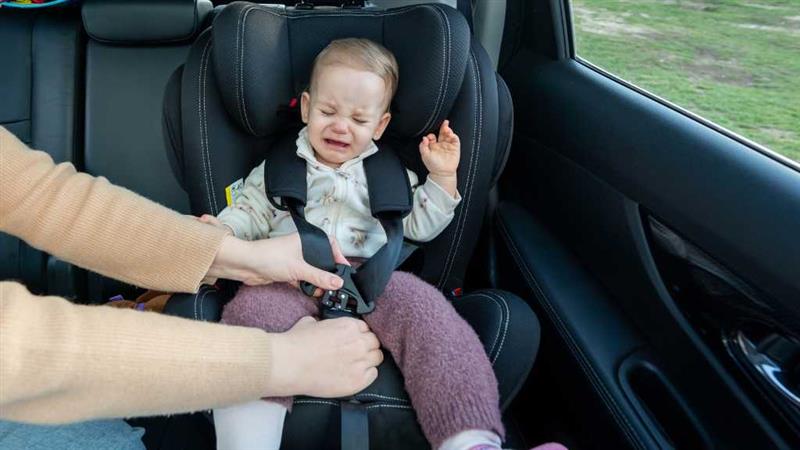
When speaking about autism and car seat refusal, you might have seen your child scream, stiffen their body so you can’t buckle them, or attempt to escape. Although it may look like defiance, most of the time, it’s communication. Your child may be saying:
- “This feels uncomfortable.”
- “I don’t feel safe.”
- “I don’t understand what’s happening.”
- “My body needs something different right now.”
The truth is, they have a point. Car seats can create a lot of sensory input and uncomfortable transitions for many children with ASD. Instead of treating their refusal as misbehavior, it’s essential to approach it as a signal that the child needs support in this area.
How Sensory Issues Influence Car Seat Use
Sensory processing plays a massive role in how children with autism experience the world, and a car seat is basically a sensory event wrapped in plastic and padding. Everything from the harness pressure to seat vibration to the hum of traffic can intensify car seat sensory issues in autism.
Common sensory triggers in car seats for children with ASD include:
- The rigidness or texture of the seat
- Harness pressure on the shoulders or chest
- Loud buckle clicks
- Movement of the car
- Sudden braking
- Bright sunlight coming through the windows
- Temperature differences
- Unexpected noises
When you view these events from a sensory perspective, a neurodivergent child refusing to sit in a car seat becomes much easier to understand.
Simple Autism Car Travel Tips That Make a Big Difference
Here are some practical, real-world autism car travel tips for parents and caregivers. These are minor but powerful adjustments you can try right away.
Preview and practice
Let your child sit in the car seat in the living room or driveway when there’s no pressure to go anywhere. Explore it together. Touch the buckles. Talk about how they work. Pair it with a favorite song or toy.
Break the routine into small steps
The smaller the steps, the safer it feels.
For example:
- Sit in the seat
- Touch buckle
- Buckle chest clip
- Buckle lower straps
- Start car
- Short ride
This step-by-step approach is also the foundation of ABA techniques that build tolerance gradually.
Comfort items are your best friend
A soft blanket, chew-safe sensory tool, or preferred stuffed animal can help a child calm their body. Choose something safe that doesn’t interfere with the harness.
Use visual supports
Picture cards or a simple routine chart can turn the unknown into something predictable. Kids often respond incredibly well to visual reminders.
Add the proper sensory supports
For some children, noise-canceling headphones help. For others, window shades reduce the overwhelming glare. For many, a cushier seat that feels softer reduces car seat sensory issues in autism.
Creating an Autism-Friendly Car Seat Routine
Building an autism-friendly car seat routine doesn’t need to be complicated. It just requires consistency and a little creativity. Here’s a routine you can use:
Step 1: Let your child help choose things
Let them select:
- A calming song
- A sensory item
- A small toy for the drive
Offering a child struggling with autism and care seat refusal a sense of control can help significantly.
Step 2: Keep the order the same each time
Many ASD children thrive on predictability. Use the same language and steps each time.
For example:
“First sit, then buckle, then music, then driving.”
Step 3: Reward what you want to see
Praise calm moments. Celebrate progress. Reinforce staying buckled even for 30 seconds longer than yesterday.
Step 4: Start with short, success-focused trips
Even driving around is a win. As your child feels more comfortable, you can slowly extend the distance.
Step 5: Prioritize comfort and safety
If needed, explore different models of autism-friendly car seat options that offer softer fabrics, more padding, or sensory-supportive features. The Buckle Up for Life guide might be helpful.
What to Do When Autism and Car Seat Refusal Are Severe
When autism and car seat refusal become severe, including attempts to escape, intense meltdowns, or complete shutdown, it’s time to add extra layers of support.
Reevaluate the car seat fit
Sometimes the position or angle is the problem. A CPST (Child Passenger Safety Technician) can help.
Slow down the routine even more
Go back to practicing without driving. Reduce steps. Increase rewards.
Consider sensory alternatives
Cooling towels, softer clothing, or different harness pads (manufacturer-approved only!) can help reduce car seat sensory issues in autism.
Ask for professional support
This is where ABA therapy shines.
How ABA Therapy Helps with Car Seat Sensory Issues in Autism
La terapia ABA gives families structured, evidence-based strategies to support children through complex routines, including car travel. At ABA Centers of New Jersey, we see success with these approaches almost every day.
ABA can help your child by:
- Breaking the car seat routine into smaller, teachable steps
- Reinforcing calm and cooperative behaviors
- Teaching replacement behaviors for refusal
- Reducing anxiety through predictable routines
- Supporting sensory needs using individualized strategies
For many families, ABA is the turning point where car rides stop feeling impossible and start feeling manageable again.




 Español
  English